

Which AWD compact SUV fits Pierre, SD driving better — 2026 Mitsubishi Eclipse Cross or 2026 Jeep Compass?
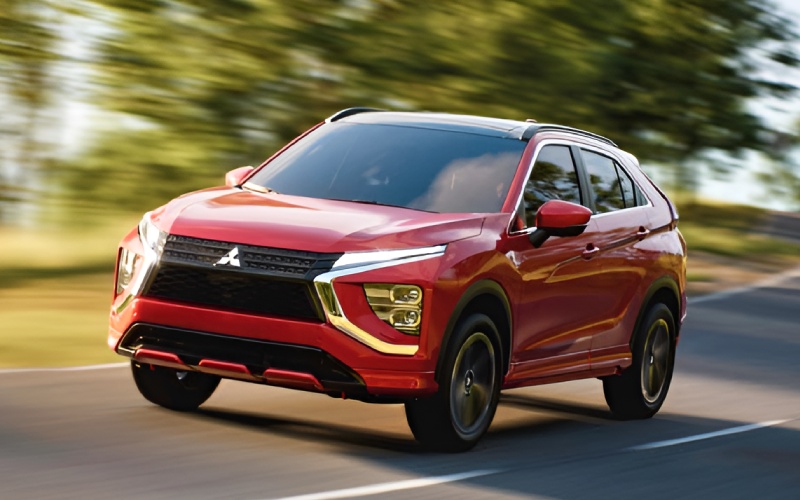
Vern Eide Mitsubishi – Which AWD compact SUV fits Pierre, SD driving better — 2026 Mitsubishi Eclipse Cross or 2026 Jeep Compass?
What local drivers compare first
When shoppers in and around Pierre, SD ask which SUV handles mixed surfaces, side winds, and surprise slush with less stress, the conversation quickly narrows to two capable choices: Mitsubishi’s standard Super-All Wheel Control and Jeep’s 4×4 systems. Both the 2026 Mitsubishi Eclipse Cross and the 2026 Jeep Compass promise surefootedness, but they go about it differently. Eclipse Cross makes S-AWC standard across the lineup and tunes it for subtle, predictive control on everyday roads. Compass equips every model with a 4×4 system and layers on Jeep Active Drive Low and Rock Mode for the Trailhawk trim. The question is not whether they can find traction—it’s which one does it more smoothly for the way you actually drive around town and on county roads outside Pierre.
Here’s the short answer: If your daily drive mixes highway stretches with blustery river-valley crosswinds, neighborhood cut-throughs, and gravel segments to trailheads or lakes, Eclipse Cross typically feels calmer and more confidence-inspiring. If you plan to crawl over rocks or tackle rutted, low-speed trails regularly, Compass Trailhawk’s additional hardware may be the ticket. Most Dakotans live squarely in that first scenario—regular roads that aren’t always cooperative—so let’s go deeper on how the systems differ and what that means for your week-to-week experience.
AWD systems, explained in plain language
S-AWC continuously evaluates wheel speed, steering angle, yaw, and throttle to apportion torque and brake force where it stabilizes the vehicle best. You feel that as a planted, predictable arc through an on-ramp, or sure-footed acceleration from a slushy intersection. Selectable drive modes—like Snow and Gravel—adjust calibration so the SUV reacts more like a seasoned local than a startled visitor when conditions change. Jeep’s standard 4×4 system is proven and capable, and Selec-Terrain lets you pick Auto, Snow, Sand, or Mud to tailor traction. On Trailhawk, Jeep Active Drive Low adds a crawl ratio and Rock Mode for more technical off-roading. In short, both are capable—Eclipse Cross is optimized for everyday traction finesse, while Compass Trailhawk is optimized for occasional technical terrain.
Drivers who split time between city errands and county highways will likely appreciate how Eclipse Cross eases you through variable traction without drama. It’s the difference between a system that’s unobtrusive by design and one that’s designed to broadcast its ruggedness; both good, but they feel different from behind the wheel.
Cabin and tech you’ll use every day
Inside, Eclipse Cross emphasizes comfort and clarity. Upper trims offer synthetic suede or leather-appointed seating, an 8-way power driver seat and, notably, an available 8-way power passenger seat—rare in the class. The available Multi-View Camera System supplies that top-down perspective you want in tight lots or when you’re lining up with a trailer. Jeep answers with a modern Uconnect interface, available 10.25-inch Digital Cluster Display, and heated front seats and steering wheel standard on every 2026 Compass. As everyday conveniences stack up, Eclipse Cross counters with a Handsfree Power Tailgate and a tidy control layout that new owners figure out in minutes, not days.
For connectivity, both SUVs support Apple CarPlay and Android Auto. Eclipse Cross adds Mitsubishi Connect with Safeguard And Remote Services with a 24-month trial after enrollment—handy for remote functions, emergency assistance, and vehicle status checks. Whether you prioritize bigger screens or a few extra near-the-surface convenience touches, both cabins are well-equipped; the Mitsubishi simply makes more common tasks feel effortless.
Safety, confidence, and the fine print that matters
Both SUVs bring a robust safety story. Eclipse Cross includes Forward Collision Mitigation with Pedestrian Detection and Lane Departure Warning; Blind Spot Warning with Lane Change Assist and Rear Cross Traffic Alert are available on popular trims. Jeep offers available Active Driving Assist for lane centering on properly marked roads, standard Forward Collision Mitigation, and Drowsy Driver Detection. Where Eclipse Cross clearly separates itself is ownership protection: an industry-leading 10-year/100,000-mile Powertrain Limited Warranty and 2-Year/30,000-Mile Limited Maintenance. If you plan to keep your compact SUV through road trips, new teen drivers, and plenty of busy seasons, that coverage adds real, measurable value.
Towing is another differentiator. Jeep Compass can tow up to 2,000 pounds when properly equipped, while Eclipse Cross is rated up to 1,500 pounds. If you need that last increment for a heavier small trailer, Jeep has the edge. If you mostly carry bikes, coolers, or a light utility trailer, Eclipse Cross remains an easy fit—especially given its calmer demeanor in dicey traction moments.
- Traction feel on real roads: Eclipse Cross prioritizes stability and predictability with standard S-AWC; Compass focuses on broader 4×4 capability, with Trailhawk tuned for low-speed technical terrain.
- Everyday convenience: Eclipse Cross offers an available power passenger seat, Handsfree Power Tailgate, and Multi-View Camera System; Compass counters with crisp displays and heated touchpoints across the lineup.
- Long-term assurance: Eclipse Cross includes a 10-year/100,000-mile Powertrain Limited Warranty and 2-Year/30,000-Mile Limited Maintenance; Compass provides a 5-year/60,000-mile powertrain warranty.
So which one fits Pierre life better? For most residents balancing commuting, carpools, and quick escapes to the water or the rolling prairie, Eclipse Cross is the right-size answer. It’s composed, well-equipped with the features that simplify daily life, and protected by one of the strongest warranty and maintenance packages in the business. If your weekends routinely involve slow, technical off-roading, the Compass Trailhawk will feel purpose-built—just be sure you’ll use those specialized features often enough to outweigh the Mitsubishi’s everyday strengths.
When you are ready to drive both and feel the differences firsthand, stop by for a comparison test drive. Vern Eide Mitsubishi is serving Fargo, ND, and Pierre and Yankton, SD, with knowledgeable guidance and a relaxed, helpful approach. We’ll talk through how you drive, what you carry, and which features will make each week easier, then help you choose the compact SUV that matches your life without overcomplicating it.
Frequently Asked Questions:
Is S-AWC always active on the Eclipse Cross?
Yes. S-AWC continuously monitors traction and vehicle behavior, then adjusts torque and braking to keep the vehicle balanced. You can also select modes like Snow or Gravel to further tailor the response.
Do I need the Trailhawk’s extra 4×4 gear for Pierre, SD winters?
If your winter driving involves maintained roads with packed snow, slush, and the occasional drift, Eclipse Cross with S-AWC is more than up to the task. If you plan low-speed rock crawling or deeply rutted two-track trails, Trailhawk’s added hardware makes sense.
Which is easier to park downtown?
Eclipse Cross with the available Multi-View Camera System provides a top-down view that simplifies parallel parking and tight-lot maneuvering. Compass offers clear camera views, but a surround-view system is not listed for 2026 models.
0 comment(s) so far on Which AWD compact SUV fits Pierre, SD driving better — 2026 Mitsubishi Eclipse Cross or 2026 Jeep Compass?