

How the 2026 Mitsubishi Eclipse Cross’ Super-All Wheel Control Works on County Roads around Aberdeen, SD
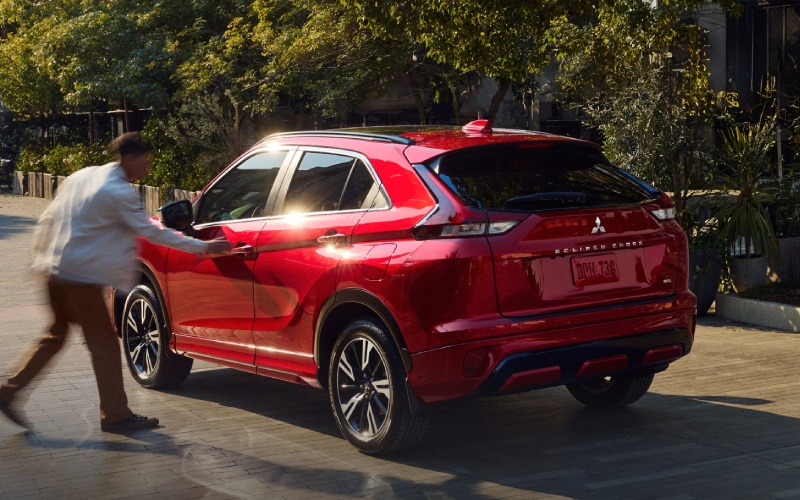
Vern Eide Mitsubishi – How the 2026 Mitsubishi Eclipse Cross’ Super-All Wheel Control Works on County Roads around Aberdeen, SD
When your daily drive shifts from town streets to open county roads, stability matters just as much as comfort. That’s where Super-All Wheel Control (S-AWC) in the 2026 Mitsubishi Eclipse Cross shines, using real-time logic to help the SUV feel planted on gravel stretches, patched asphalt, and blustery open sections common around Aberdeen, SD. Rather than just sending power to four wheels, S-AWC works as an integrated handling system, coordinating traction, yaw control, braking inputs, and torque distribution to keep things balanced and predictable—especially when surface grip changes from one mile to the next.
This isn’t a feature you notice only in dramatic moments. It shows up in the small, repeatable ways your SUV behaves—cleaner pullaways when the shoulder is dusty, fewer steering corrections when a gust hits out of nowhere, and a sense that the front end stays engaged in the corner without drama. Add in the Eclipse Cross’s quiet cabin and user-friendly tech, and S-AWC becomes part of a calm, confident rhythm that makes long days on U.S. 12 or quick detours on township roads feel easy.
What S-AWC Is Doing Behind the Scenes
In the 2026 Eclipse Cross, S-AWC constantly evaluates wheel speed, steering angle, throttle input, and available traction to determine how best to send power and apply selective braking. The goal is not simply maximum grip; it’s balanced, consistent control. On a loose surface, a quick, measured brake application at an inside wheel can help the vehicle rotate more naturally through a bend. On a rutted approach to an intersection, S-AWC helps reduce scrabble and wheel hop so the SUV sets off smoothly. And when a crosswind hits over open fields, subtle torque shifts help you hold a straighter line with fewer inputs.
Drive Modes and Everyday Confidence
Beyond its constant baseline adjustments, S-AWC gives the driver selectable modes to suit conditions and preferences. Switching modes fine-tunes throttle mapping and how quickly the system responds to changing traction, allowing you to choose a feel that matches the day’s route and surface.
- Normal: Balanced response for mixed roads and everyday use.
- Snow: Calmer throttle and heightened traction logic for slick or loose surfaces.
- Gravel: Sharper torque distribution and stability control for dirt and aggregate roads.
What stands out is how natural it feels. Even in Gravel mode, the Eclipse Cross avoids the abruptness some systems show when surfaces get choppy. You feel supported without the sensation that computers are fighting your inputs.
How S-AWC Helps on Aberdeen-Area Roads
County routes around Aberdeen, SD, often combine varying surfaces with stretches of open exposure to wind. On a day when a farm approach throws dust across the road, S-AWC works with Active Stability Control (ASC) and available Blind Spot Warning (BSW) with Lane Change Assist (LCA) to help you maintain line and awareness. If you pull into a busy lot for errands, Rear Cross Traffic Alert (RCTA) and the available Multi-View Camera System make it easier to maneuver while S-AWC keeps launches smooth, even if the surface is uneven or sandy. The net effect is that the Eclipse Cross feels like it is constantly smoothing the edges of your route, trimming effort without dulling control.
Power, Braking, and Steering Working Together
The turbocharged 1.5-liter engine pairs with a responsive CVT to keep momentum steady, and S-AWC coordinates with the braking system to trim subtle wheel spin or correct yaw without abrupt intervention. It’s a connected feeling—light steering that still places the front end accurately, braking that stays consistent over broken pavement, and power delivery that avoids the big surges you sometimes notice in uneven traction. For drivers who split time between paved arterials and gravel connectors, that consistency becomes a real quality-of-life benefit.
Safety and Tech That Support Confident Control
Active safety features reinforce what S-AWC starts. Forward Collision Mitigation (FCM) with Pedestrian Detection and Lane Departure Warning (LDW) come into play when visibility tightens or traffic closes in near town, and available upgrades like BSW with LCA and RCTA expand your awareness at higher speeds or in crowded parking areas. If you’re managing a busy schedule, available Mitsubishi Connect with Safeguard and Remote Services (enrollment required) adds convenience, and select trims bring a Handsfree Power Tailgate to simplify cargo loading at the end of a long day.
It’s the sum of these parts—S-AWC helping you feel settled on mixed surfaces, assistance systems watching traffic, and cabin tech streamlining the routine—that makes the Eclipse Cross a strong match for counties across northeastern South Dakota. The SUV does not chase theatrics; it builds trust a mile at a time.
Tips to Get the Most From S-AWC
- Match the mode to the surface: Use Gravel on dirt or aggregate roads and Normal for mixed pavement to keep responses natural.
- Keep tires in good shape: Even wear and proper inflation help S-AWC distribute grip more precisely.
- Be smooth with inputs: Progressive steering and throttle let the system work without overcorrection.
- Leverage your assists: Pair S-AWC with available BSW with LCA and RCTA for a broader confidence net.
If you want to feel how S-AWC behaves where you actually drive, ask for a test loop that includes a stretch of unpaved road, a gust-prone overpass, and a few tight turns. The seamlessness of the system is easiest to appreciate when the route mirrors real life.
Frequently Asked Questions:
Is S-AWC always on, or only in certain modes?
S-AWC is always active in the Eclipse Cross. Drive modes simply tailor how assertively the system manages traction and stability for different surfaces.
Does S-AWC help with crosswinds?
Yes. While it is not a wind-control feature, the system’s torque distribution and stability logic can reduce the steering corrections you need when a gust hits across open fields.
Will S-AWC replace winter tires?
No. S-AWC enhances control, but appropriate seasonal tires remain important for the best possible grip in severe winter conditions.
Is maintenance different on an S-AWC vehicle?
Routine care is straightforward. Follow the maintenance schedule, rotate tires regularly, and keep software and systems in good order to ensure optimal performance.
If you’re curious how this all comes together on your routes, schedule time with Vern Eide Mitsubishi for a drive that puts S-AWC through its paces on the surfaces you know best. Our team is serving Aberdeen, Brookings, and Watertown with test-drive guidance that focuses on real-world control, from town streets to gravel connectors and everything in between.
0 comment(s) so far on How the 2026 Mitsubishi Eclipse Cross’ Super-All Wheel Control Works on County Roads around Aberdeen, SD