

Does the 2026 Mitsubishi Eclipse Cross or 2026 Hyundai Tucson AWD feel more confident on gravel and crosswinds near Watertown, SD?
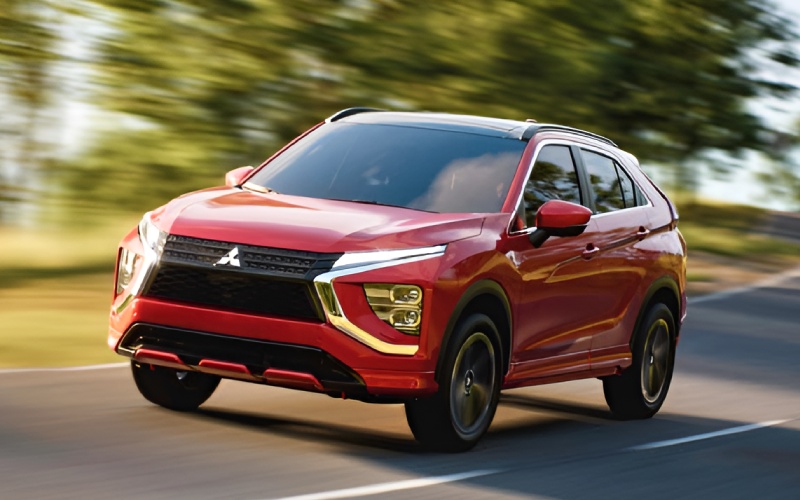
Vern Eide Mitsubishi – Does the 2026 Mitsubishi Eclipse Cross or 2026 Hyundai Tucson AWD feel more confident on gravel and crosswinds near Watertown, SD?
Shoppers often ask a straightforward question: which compact SUV feels more confident when the pavement ends or the wind picks up—Mitsubishi’s Super-All Wheel Control or Hyundai’s HTRAC AWD? It is a fair question for anyone commuting on Highway 212, navigating gravel section roads, or parking on angled driveways in neighborhoods around Watertown, SD. Let’s break down how both systems work and why Eclipse Cross owners tend to describe theirs as poised and predictable in those in-between traction moments where confidence matters most.
Super-All Wheel Control (S-AWC) is standard on every 2026 Eclipse Cross, meaning its advanced control strategy is baked into the vehicle from the ground up. S-AWC blends front-to-rear torque management with braking force at individual wheels and drive modes—Auto, Snow, and Gravel—to optimize grip and reduce understeer or wheelspin. It is the integration that stands out: S-AWC is always reading conditions and adjusting proactively to maintain a stable, neutral feel. In practice, that means pulling onto a gravel shoulder, powering through a rutted alley, or merging on a gusty day feels calm instead of twitchy. By comparison, Hyundai’s HTRAC AWD, available on Tucson, adds valuable confidence in poor weather and distributes torque smartly, especially in Snow mode. It is a solid performer. But because HTRAC is optional, matching Eclipse Cross’s all-trim consistency requires shopping specific Tucson packages and trims.
On the road, the difference often reveals itself at the margins. Imagine making a left across a busy street where the pavement is damp. The Eclipse Cross S-AWC leans into its measured torque delivery, balancing power to help keep the nose planted and tracking straight under light throttle. Drivers report the steering stays settled and the response builds smoothly. On a Tucson equipped with HTRAC, you still get improved traction over a comparable front-drive configuration, but the sensation isn’t quite as tie-down-steady unless you are in the right drive mode for the moment. Over time—week after week of errands, work trips, and rural detours—that extra polish in the Eclipse Cross becomes the kind of confidence you notice most when conditions change suddenly.
Another frequent question is how these AWD systems influence everyday comfort. The answer is encouraging: Eclipse Cross pairs S-AWC with a quiet, comfort-tuned suspension and an easygoing driving position. You get the calm ride you want without the float, thanks to chassis tuning that filters out sharp impacts from patched pavement and expansion joints. Tucson’s tuning is also comfort-forward, particularly on trims with smaller wheel packages, and higher trims add slick tech like wide-format screens and available Highway Driving Assist. Both are pleasant. Yet, Eclipse Cross shines in that blend of stability and serenity—especially appreciated when crosswinds push in the open stretches near town or when you drop a wheel onto crushed limestone shoulders during a tight pass.
Technology and visibility round out the comparison. Eclipse Cross offers a Multi-View Camera System on select trims to deliver a 360-degree bird’s-eye view in tight parking or when nosing into a campsite. Blind Spot Warning (BSW) with Lane Change Assist (LCA) and Rear Cross Traffic Alert (RCTA) add helpful safety coverage, while Mitsubishi Connect with Safeguard and Remote Services (24-month trial; enrollment required) keeps support close at hand. Tucson counters with an array of Hyundai SmartSense features, including Forward Collision-Avoidance Assist (FCA), Lane Keeping Assist (LKA), Blind-Spot Collision Warning (BCW), and, on higher trims, tech such as Highway Driving Assist (HDA) and Surround View Monitor. Both deliver robust driver aids, and both offer hands-free tailgates as well as available panoramic roofs that make road trips brighter. The differentiator is how naturally Eclipse Cross melds AWD control with those assists so the SUV feels cohesive and predictable.
For shoppers deciding between the two, start with the basics: will you benefit from AWD every day, and do you prefer it without having to chase a specific trim? If yes, the Eclipse Cross case is strong. Standard S-AWC means every version is winter-ready and gravel-friendly, and you never compromise on the integrated tuning that gives this SUV its confident demeanor. Add the turbocharged 1.5L’s smooth torque and available paddle shifters for manual control on hills, and you have a compact SUV that anticipates what Upper Midwest driving asks of it.
- Key takeaway on traction: Standard S-AWC on Eclipse Cross delivers proactive torque management and braking control at each wheel for poised handling on gravel, rain-soaked intersections, and windy highways.
- Everyday drivability: Eclipse Cross tuning emphasizes quiet composure and predictable steering, so commutes and school runs feel calm even when conditions shift.
- Feature parity where it matters: Both SUVs offer Apple CarPlay and Android Auto compatibility, available panoramic roofs, hands-free liftgates, and robust driver-assistance suites.
Ultimately, the better AWD is the one you trust to do the subtle work in the background while you focus on the road. That is where the Eclipse Cross sets itself apart. Test both systems on the same loop—include a gravel stretch, a quick highway merge, and a few tight parking maneuvers—and pay attention to how planted and quiet the vehicle feels when traction changes quickly. The difference will be clear.
Vern Eide Mitsubishi proudly supports shoppers across the region, serving Aberdeen, Brookings, and Watertown with a test-drive experience designed to answer your what-if questions before they ever come up on the road. Bring your route ideas, your gear, and your toughest traction scenarios—we will help you feel how S-AWC handles them with relaxed confidence.
Frequently Asked Questions:
Is AWD standard on the 2026 Eclipse Cross and 2026 Tucson?
AWD is standard on every 2026 Eclipse Cross thanks to Super-All Wheel Control (S-AWC). AWD on the 2026 Tucson is available as HTRAC AWD, but not standard on every trim.
How do S-AWC and HTRAC AWD differ in everyday driving?
S-AWC integrates torque distribution with selective braking and drive modes to proactively steady the vehicle. HTRAC AWD improves traction by shifting torque front-to-rear and offers Snow mode. Both help in poor conditions, but S-AWC’s integration often feels more settled on mixed surfaces.
Which SUV is easier to park and maneuver around town?
Both are manageable, but many drivers find the Eclipse Cross’s footprint and Multi-View Camera System on select trims make tight lots and angled driveways simpler.
Do both models offer smartphone integration and connected services?
Yes. Eclipse Cross offers Apple CarPlay and Android Auto compatibility and Mitsubishi Connect with a trial period (enrollment required). Tucson includes smartphone integration and Bluelink+ connected features.
What should I test on a back-to-back drive?
Include a gravel or uneven surface, a windy highway merge, and a tight parking sequence. Feel for steering stability, smooth power delivery, and how calm each SUV remains when conditions change.
0 comment(s) so far on Does the 2026 Mitsubishi Eclipse Cross or 2026 Hyundai Tucson AWD feel more confident on gravel and crosswinds near Watertown, SD?